Milodomain


Expired domain: 3 SEO strategies to exploit it effectively in 2026

You just won an expired domain on Milodomain.com. Congratulations. Now, a real question arises: what to do with it? There are three main strategies, from the simplest to the most risky. Each has its budget, its return timeline, its risk level and its typical user profile. This guide details all three, their strengths and pitfalls, so that you can choose with full knowledge.
What to do right after acquisition?
Five technical actions are needed once the domain is in your hands: claim the DNS and point it to your own server or Cloudflare, put a 200 OK page online immediately to avoid a dead DNS, register the domain in Google Search Console to detect any inherited penalty, prepare a Disavow file if needed, and check the current indexation state via site:yourdomain.fr.
Before launching into a strategy, a few preliminary technical steps, often overlooked, can save you weeks:
- Reclaim the DNS. As soon as you receive the domain, point it to your own server (or to Cloudflare to start). Do not let DNS point nowhere: you lose all residual direct traffic.
- Put a 200 OK page online immediately. Even a simple landing page "Project in progress, back soon". Google keeps crawling, better a 200 than dead DNS that degrades signals.
- Set up Google Search Console. This gives you visibility on any inherited manual penalty. It is also useful for later sitemap submission.
- Test the Disavow Tool. If the prior analysis revealed toxic links, prepare a disavow file in parallel.
- Check the current indexing status with
site:votredomaine.fron Google. How many pages indexed? What is their content?
Strategy 1, The 301 redirect to your main site
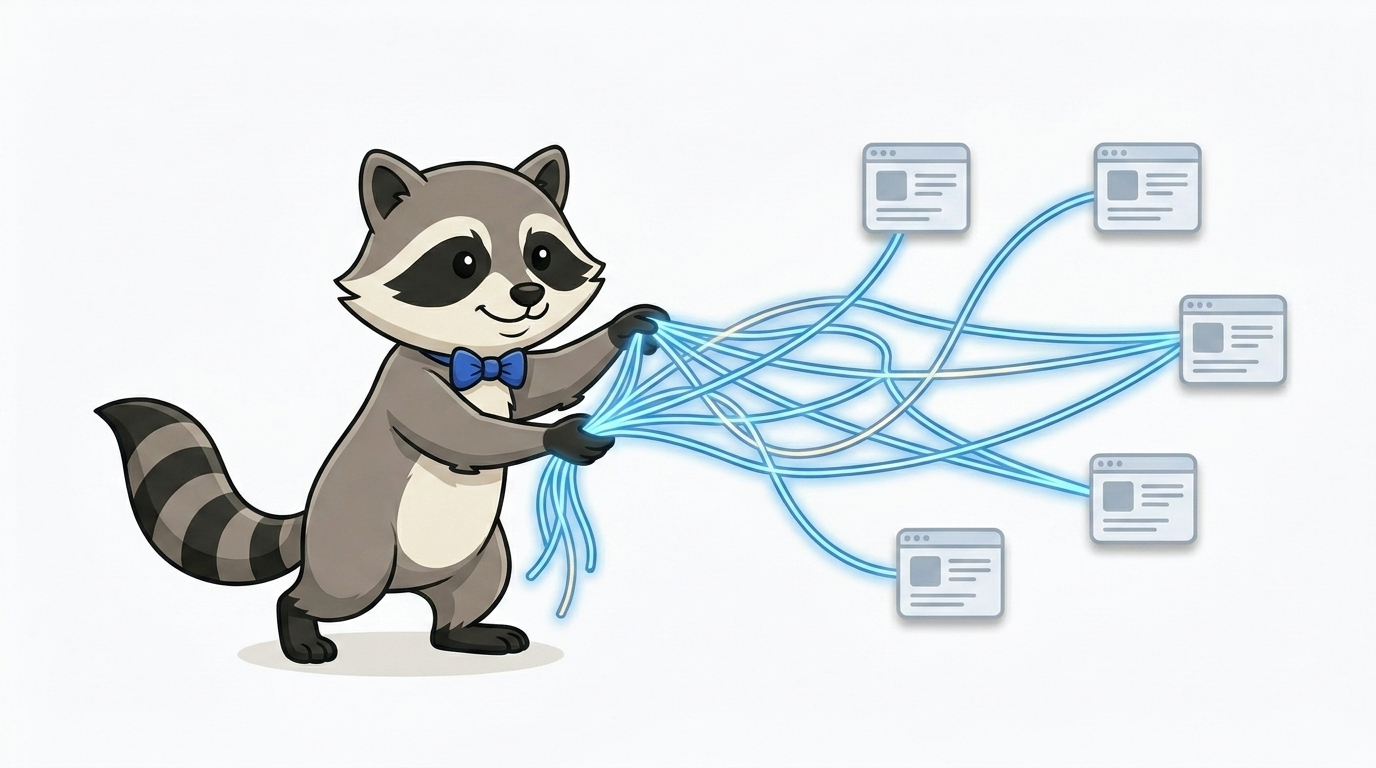
A 301 redirect transfers part of an expired domain's SEO juice to a page on your main site. It works when the domain and the target are thematically consistent and the link profile is clean. It fails on massive incoherent redirects or on penalised domains that can contaminate the target site. The peak effect sits between six weeks and four months.
The fastest method and the most used by SEO agencies. You configure a permanent redirect (301 Moved Permanently) from the expired domain to a page on your main site, ideally very close topically.
Technical principle
A 301 tells Google and visitors: "this URL has moved permanently here". The browser follows the redirect, and Google transmits part of the "juice" (link equity) of backlinks pointing to the old URL to the new target URL.
When it works
- The expired domain and the target page are topically consistent (restaurant-bio.fr redirecting to an "organic cuisine" page on your site).
- The link profile of the expired domain is clean and natural.
- You redirect page by page when possible (one-to-one), not just the home to the home.
When it doesn't work
- Massive and generic redirects (20 heterogeneous domains to the same target page), Google has been devaluing them since 2022.
- Total topical inconsistency (travel → health insurance).
- Penalized domain whose redirect risks contaminating your target site.
Implementation
A few lines in your .htaccess (Apache) or your Cloudflare rule are enough:
Redirect 301 / https://votresiteprincipal.fr/page-cible/With Cloudflare (recommended because it is free and fast): Rules → Redirect Rules → Dynamic URL Redirect → Status 301.
Lifespan of the SEO gain
Google progressively discounts the authority of a 301 over several months, this is measurable in public studies. The peak effect is between 6 weeks and 4 months, with slow erosion afterwards. Count on 60-70% of the initial gain still present at 12 months on a topically consistent redirect, 30% on a generic redirect.
Strategy 2, Topical rebuild (clean build)
Topical rebuild consists of putting up a real website on the expired domain in the same theme as its history. It is the most virtuous strategy and the one Google has explicitly favoured since 2024. Realistic budget between EUR 500 and 5,000 for a serious site, first results at 3-4 months and stabilisation at 8-12 months. You create a monetisable, resellable asset.
You bring back a real site on the expired domain, in the same theme as its history. You capitalize on its past while creating real value.
Principle
Google recognizes topical continuity, the old backlinks continue to point to relevant content, and the site can rank quickly on competitive queries. This is the most virtuous strategy, and the one Google has explicitly favored since 2024.
Typical budget and timeline
- Hosting + WordPress/CMS: 5 to 20 EUR/month.
- Writing: 30 to 80 initial articles, 80 to 250 EUR per article in quality outsourcing, or your time if you write yourself.
- Design/theme: 0 to 500 EUR (pro theme bought once).
- Time to see results: 3 to 4 months for first rankings, 8 to 12 months for stabilization.
Realistic total budget: 500 to 5,000 EUR for a serious site in a competitive niche.
Minimal editorial plan
- 10 pillar articles of 2,000 to 3,000 words covering the core topics of the theme.
- 20 to 40 secondary articles of 800 to 1,500 words on long-tail queries.
- Clean internal linking between pillars and secondaries.
- Regular publishing for the first 6 months (2 to 4 articles/week).
Advantages
A sustainable, clean strategy that Google loves, with possible direct revenue (AdSense, affiliate, products, services). You build a monetizable and resellable asset.
Drawbacks
Requires real editorial work (10 to 50 articles minimum to relaunch a site) and several months before seeing stable results. Not suited if you are looking for a quick SEO effect on another site.
Strategy 3, The PBN (private blog network)
A PBN is a network of independent sites that strategically link to a target site to send it SEO authority. In 2026 the risks explode: Google detects hosting, technical, editorial footprints and link patterns, and takes networks down in entire waves. The penalty can propagate to the target site and lead to full deindexation. Reserved to seasoned professionals.
The PBN consists of setting up a network of independent sites (different hosts, different IPs, different apparent owners) that strategically point to a target site (the money site) to send it SEO authority.
Principle
Each site in the PBN publishes its own content, looks like a legitimate blog, and naturally embeds one or two links to the target site in its articles. Each site relays partially the juice of its own backlinks to the target. Multiplied by 10, 20 or 50 sites, the cumulative effect can be spectacular.
Risks in 2026
Google has massively improved its detection since 2022, and even more since 2024 with updates focused on helpful content and semantic deduplication. The signals that take down a PBN:
- Hosting footprints: same class C IP, same nameservers, same host for several sites in the network.
- Technical footprints: same WordPress version, same themes, same plugins, same JavaScript fingerprints.
- Editorial footprints: same writing style across 30 different sites, same article structure, same generic authors.
- Link patterns: each site links to 1-3 identical targets across the network, Google correlates.
- Reports by competitors (Google's spam report is used professionally).
Google detection
PBNs now fall in entire waves during Google updates (notably HCU, SpamBrain). A single detection can deindex the entire network, and transmit the penalty to the target site.
Important note: we do not recommend this strategy to beginners. The risk of sandbox or total deindexing is non-negligible. Reserved for experienced professionals who know how to diversify to the extreme.
Comparison table
Visual synthesis of the three strategies across six criteria: initial cost, recurring work, time to results, durability, Google risk and typical user profile. The 301 redirect suits SEO agencies, the clean build suits long-term project owners, and the PBN is reserved to experienced SEOs able to enforce extreme diversification. No strategy is universally superior.
| Criterion | 301 Redirect | Clean build | PBN |
|---|---|---|---|
| Initial cost | 0 to 50 EUR | 500 to 5,000 EUR | 300 to 3,000 EUR per site |
| Recurring work | None | Medium (publishing) | High (maintenance 20+ sites) |
| Time to results | 4-8 weeks | 3-4 months | 3-6 weeks |
| Durability | Medium (decay) | Long (asset) | Uncertain |
| Google risk | Low | Near zero | High |
| Typical profile | SEO agency | Project owner | Seasoned SEO expert |
Which strategy for which budget?
Below EUR 300 the 301 redirect to your site is the profitable path if the backlinks are qualitative. Between EUR 300 and 1,500 the lean topical rebuild offers the best risk-reward ratio. Above EUR 1,500 the premium domain justifies either a serious clean build or a resale at 12-24 months. On a multi-domain portfolio, combine clean build on the best and 301 on the rest.
- Budget 50 to 300 EUR: 301 redirect to your site. Profitable if backlinks are quality and the theme is consistent.
- Budget 300 to 1,500 EUR: lean topical rebuild. The best return/risk ratio.
- Budget > 1,500 EUR: premium domain (short name, brand, strong authority). Either serious clean build, or resale with capital gain at 12-24 months.
- Multi-domain portfolio: combined strategy, clean build on the 3-5 best ones, 301 of the others to the main site.
Specifics of the .fr market
On the French-speaking market, the 301 redirect remains dominant among local SEO agencies that want to boost their clients. Topical rebuild has been gaining ground since 2024, driven by e-commerce project owners. The French-speaking PBN scene exists but is narrower than the English-speaking one, with easier detection. The SYRELI procedure is a risk to keep in mind on brand-like names.
On the French-speaking market specifically:
- 301 redirects remain the dominant strategy for local SEO agencies that want to boost their clients, business volume is discreet but regular.
- Topical rebuilding has been gaining ground since 2024, driven by e-commerce project owners seeking to start on an already credible base.
- The French-speaking PBN remains active but narrower than in English-speaking markets, fewer sites available, easier detection (the French SEO community is more restricted, less anonymity).
- SYRELI (AFNIC's dispute resolution procedure) is a risk to keep in mind for brand names.
The 5 mistakes to avoid
The five classic mistakes observed among new buyers: redirecting 10 domains to a single page, rebuilding with mass-generated content, building a PBN with all sites on the same host, ignoring the Disavow Tool on a borderline profile, and buying a domain without checking for trademark dispute. Each can turn a profitable investment into a loss.
- Redirecting 10 domains to a single page. Google devalues or ignores. Always favor topical consistency.
- Rebuilding with massively generated content. Well-piloted AI can help, but raw content posted in mass will be detected and penalized (Helpful Content Update).
- Building a PBN with all sites at the same host. IP footprint immediately detected.
- Forgetting the Disavow Tool on a domain with a borderline link profile. Some backlinks must be disavowed from the takeover.
- Buying a domain without checking for trademark dispute. A few minutes of INPI research can avoid 6 months of SYRELI procedure.
Indicators to track (KPIs)
Six key indicators to track in the first twelve months after acquisition: indexed pages (Google Search Console), organic impressions and clicks, Domain Rating or Domain Authority change over 3-6 months, number of referring domains, bounce rate and time spent (behavioural signals), and average positions on target queries. These metrics drive investment decisions.
Whatever the strategy, track these indicators in the first 12 months:
- Indexed pages (Google Search Console, Coverage tab).
- Organic impressions and clicks (GSC, Performance tab).
- Domain Rating / Domain Authority evolution over 3-6 months.
- Number of referring domains (must remain stable or progress).
- Bounce rate and time spent on visited pages (behavioral signals).
- Average positions on target queries.
Realistic timeline
The standard timeline of a well-exploited expired domain covers twelve months: month 1 technical setup and first content, months 2-3 regular publishing or 301 stabilisation, months 3-4 first long-tail rankings, month 6 serious checkpoint, months 8-12 stabilised positions and consolidated organic traffic. A one-year investment, not a two-week miracle.
- Month 1: technical setup, first content, Search Console, possible disavow.
- Month 2-3: regular publishing (clean build) or 301 stabilization. Google discovers the new pages.
- Month 3-4: first long-tail rankings visible.
- Month 6: serious milestone. Is the trajectory in line with projections?
- Month 8-12: stabilized positions, consolidated organic traffic, decision to continue or pivot.
A well-exploited expired domain is a 12-month investment, not a 2-week miracle solution. Those who approach it with the right expectations are those who profit from it.
FAQ
Concise answers to the strategic questions: most profitable strategy in 2026 (clean build for medium term), realistic timeline to see SEO results per approach, budget to plan per strategy, current PBN viability, ability to combine strategies on a portfolio, and what to do facing an inherited Google penalty.
What is the most profitable strategy in 2026?
Topical rebuilding (clean build) offers the best return/risk ratio in the medium term. It demands more initial work but builds a durable asset. The 301 redirect remains the fastest to be profitable if the domain and target site are topically very close.
How long to see SEO results?
301 redirect: 4 to 8 weeks for the initial transfer, gain peak at 2-3 months. Topical rebuilding: first results at 3-4 months, stabilization at 8-12 months. PBN: effect on the target in 3-6 weeks, but uncertain duration due to deindexing risk.
What budget to plan for each strategy?
301 redirect: near zero in recurring cost once configured. Clean build: 500 to 5,000 EUR for 10-50 written articles + hosting. PBN: 10 to 30 EUR per month per site (diversified hosting), plus the cost of writers and maintenance time.
Is the PBN still viable in 2026?
Yes but with much more risk than in 2020. Google has massively improved its detection of networks. PBNs that survive today require extreme diversification (different hosts, varied CMS, human writing without templates). Reserved for experienced professionals.
Can multiple strategies be combined?
Yes, and this is often the most profitable on a large portfolio. Typical example: clean build on the 5 best domains, 301 redirect of the others to the main site. Be careful not to abuse 301s, Google devalues massive redirects without consistency.
What to do if the domain inherits a Google penalty?
Set up Google Search Console and check the messages. If manual penalty, deal with it (disavow toxic links via Disavow Tool, reconsideration request). If algorithmic penalty, restart on fresh and clean content, massively disavow questionable links, and wait 3-6 months.
Going further
Strategy choice closely depends on the quality of the acquired domain. A rigorous evaluation before bidding, plus mastering the secondary-market vocabulary (backorder, drop-catching, redemption period), lets you align exploitation strategy with domain profile. The Milodomain catalog shows full metrics to ease this evaluation.
The choice of strategy depends enormously on the quality of the acquired domain. To evaluate calmly before bidding:
- How to analyze an expired .fr domain before bidding: 5 decisive criteria, the complete methodology.
- Expired .fr domains, drop-catching and backorder: the complete guide, if you first want to master the vocabulary.
To see qualified domains with complete metrics available right now: Milodomain.com catalog.